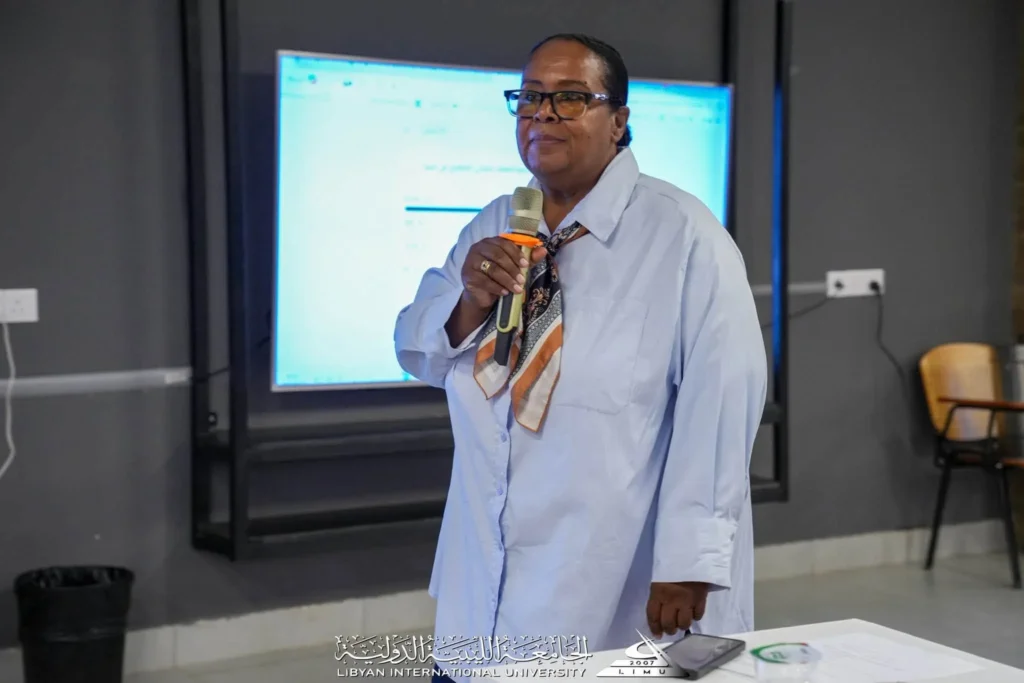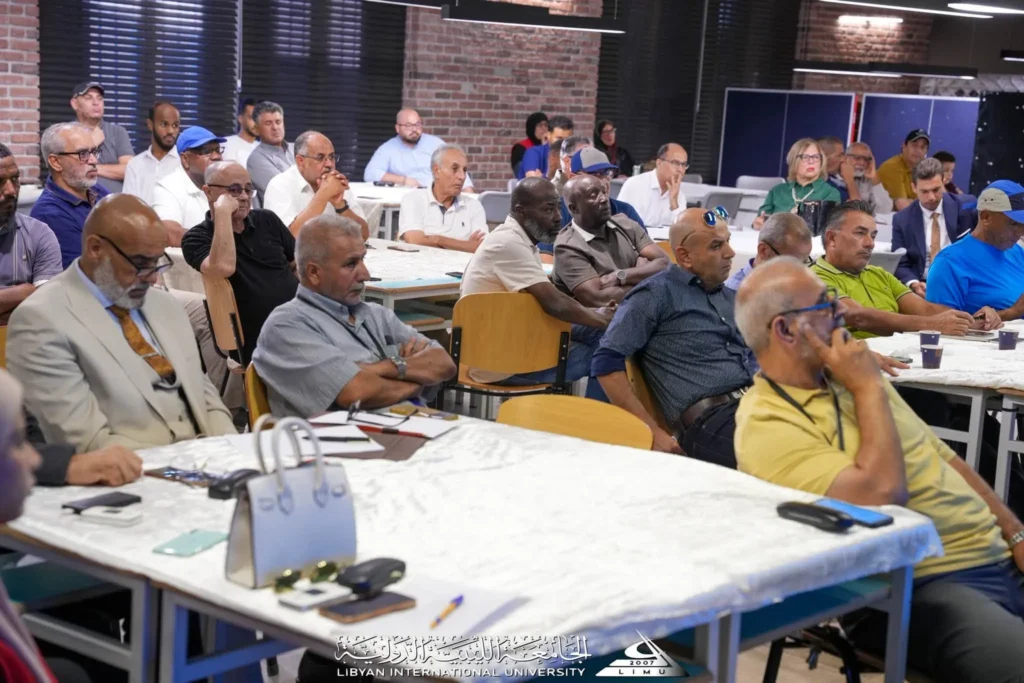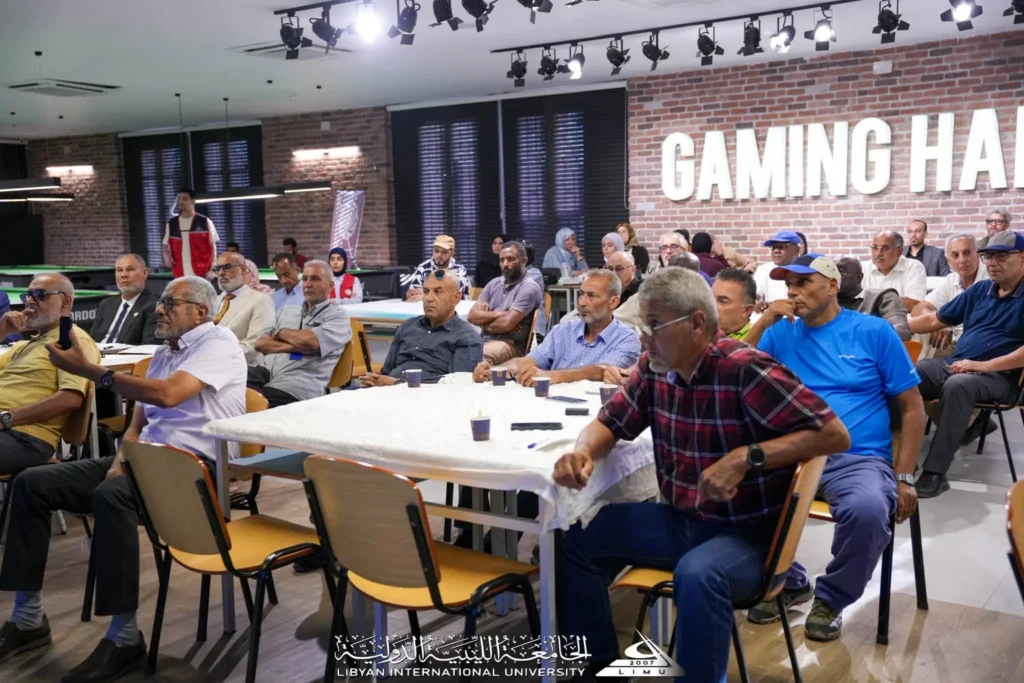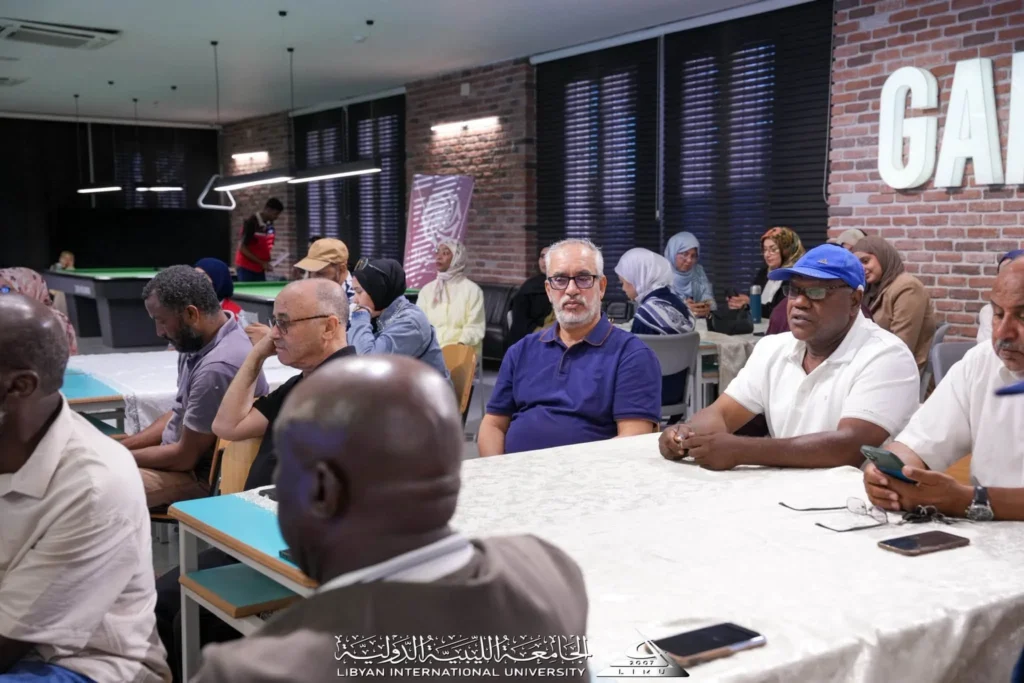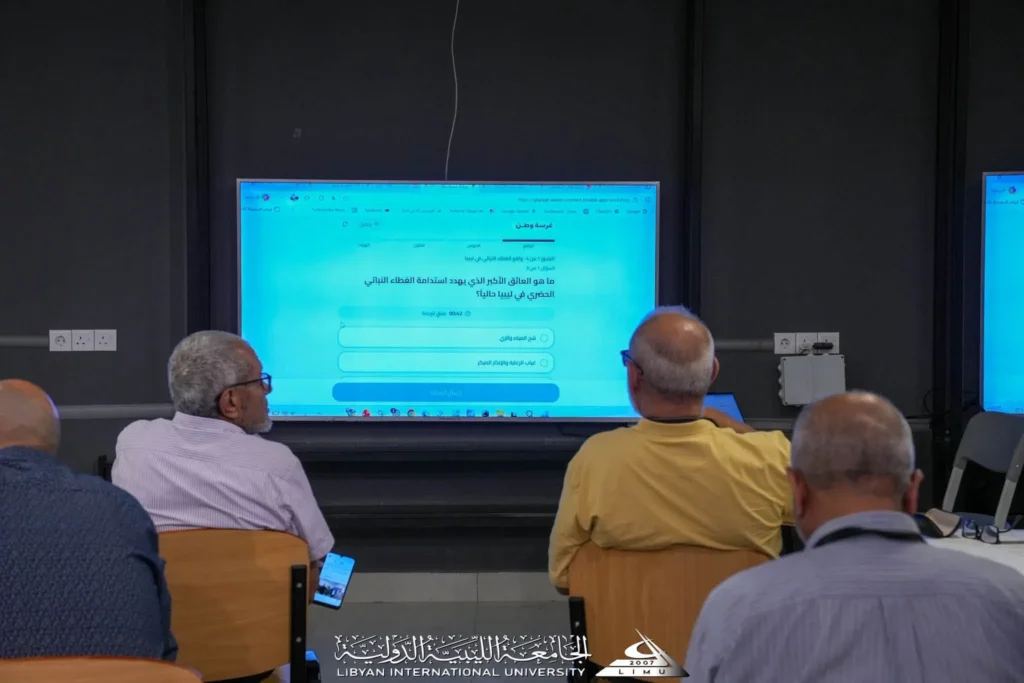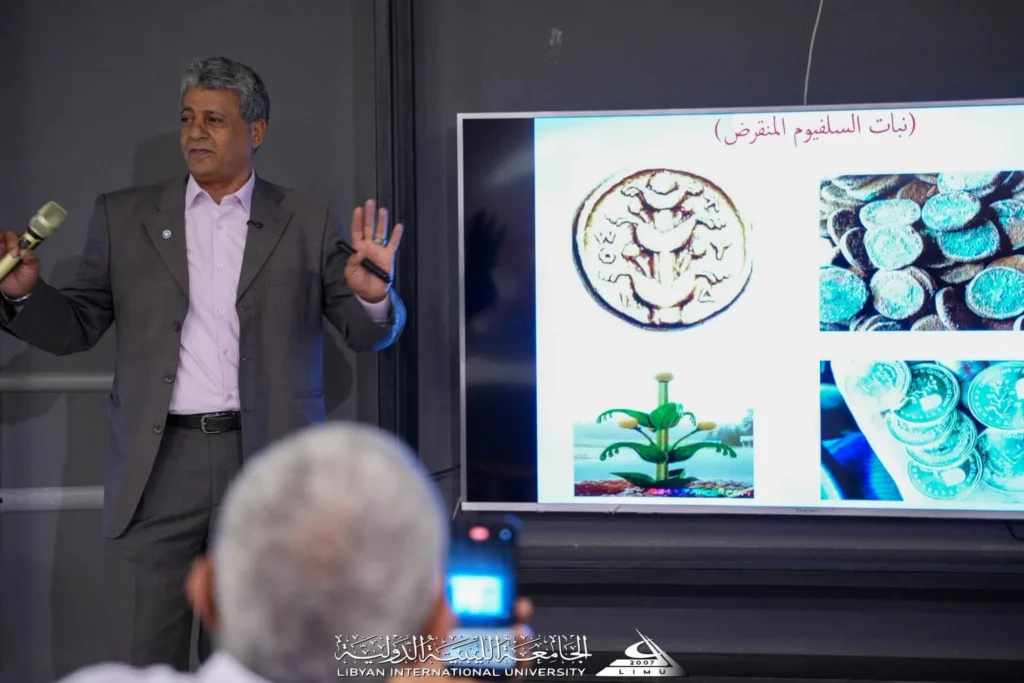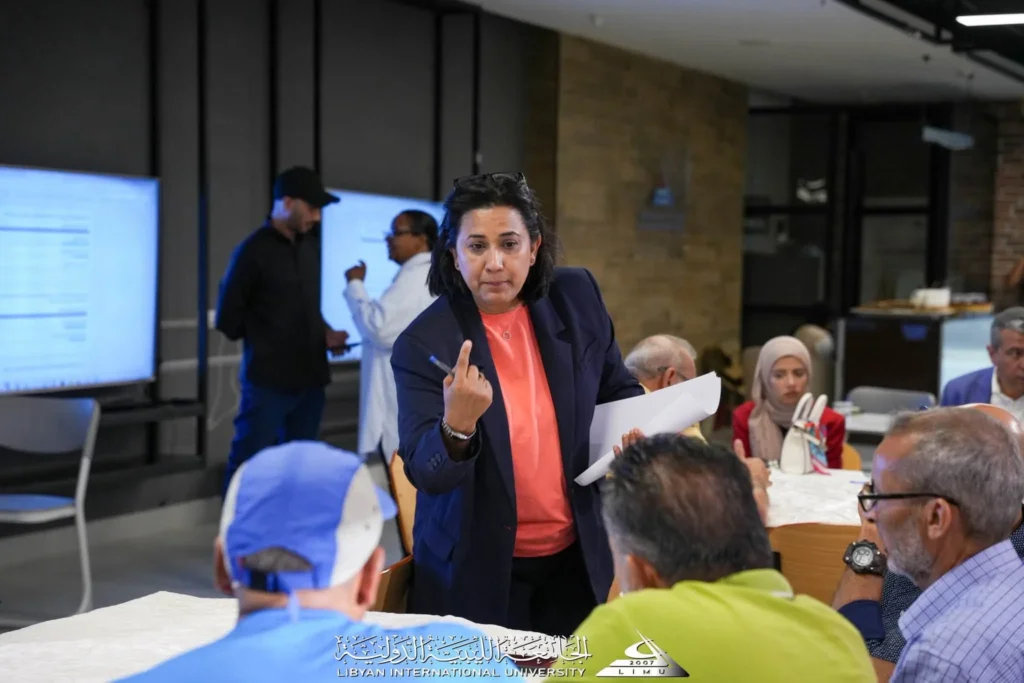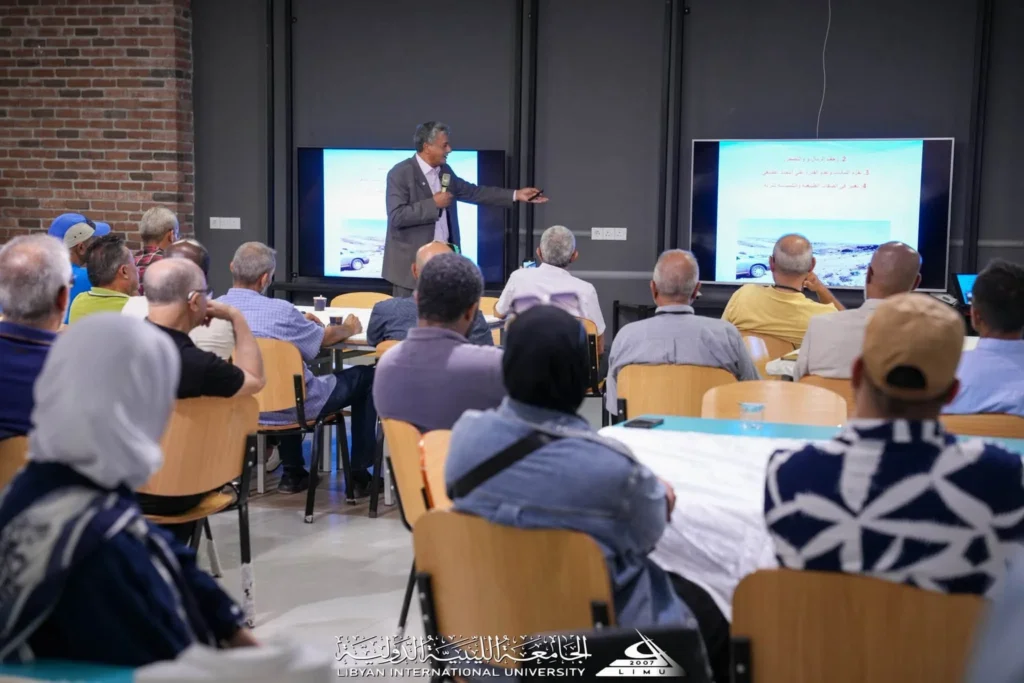
With the presence of the President of the Libyan International University, Professor Dr. Mohamed Saad Embarek, the Scout Leader Ali Khalifa Al-Zaidi Hall hosted, on the evening of Saturday, August 22, 2026, an expanded consultative meeting. The gathering brought together a large number of academics, environmental and sustainability advocates, media professionals, specialists in agricultural and botanical sciences, alongside activists in voluntary initiatives, civil society representatives, and sports figures — all to mark the launch of the “National Sapling” Initiative.
This community-driven initiative, embraced by the Libyan International University with direct support from its President — in alignment with sustainability and its requirements — aims to expand green spaces, enhance vegetation cover within Libyan cities, and develop practical solutions to climate fluctuations and environmental changes.
The consultative meeting, attended by Ms. Wehba Al-Hassi, Director of the Department of Community Responsibility and Sustainability, explored mechanisms to advance the project and define its future identity — whether it will proceed as a comprehensive national initiative or evolve into a specialized environmental institution.
The meeting featured several presentations, supported by interactive survey technologies (QR Code) and artificial intelligence to analyze responses. The key themes included:
Vegetation Cover Status: Presented by Dr. Faraj Al-Maqsabi, diagnosing current challenges and mapping plant coverage areas.
Lessons Learned from Past Experiences: Engineer Muftah Al-Khashmi reviewed reasons behind the setbacks of previous initiatives, emphasizing how to build on them to ensure the success and sustainability of upcoming afforestation projects.
Practical Solutions and Plant Species: Engineer Mahmoud Al-Mahshash offered a scientific vision on selecting plant species most suitable for the local environment, alongside adopting modern and sustainable irrigation systems.
A notable contribution came from Engineer Khaled Al-Munfi of the Libyan International University, who employed advanced technologies to engage participants in an interactive survey via QR codes. The collected data was instantly processed using AI applications to draft the vision, mission, and institutional identity based on collective consensus.
The meeting concluded with agreement on the outlines of the next phase, which will soon culminate in the official announcement of the complete identity of #National_Sapling, its objectives, and its anticipated role in expanding vegetation cover across Libya.