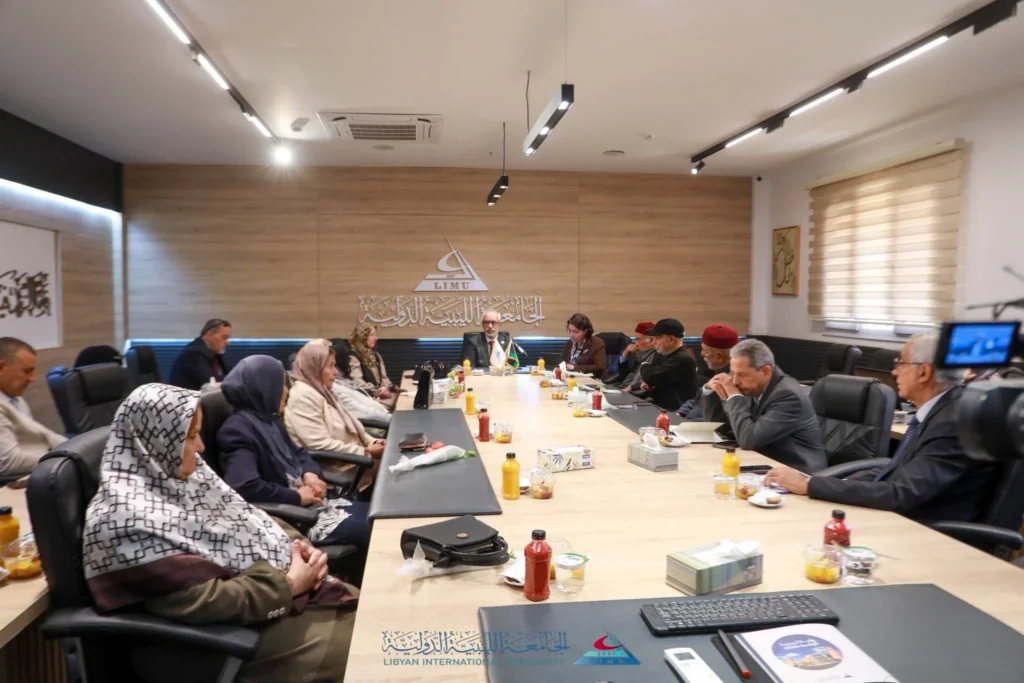
The International University Hosts “Pioneers of the 1950s and 1960s”
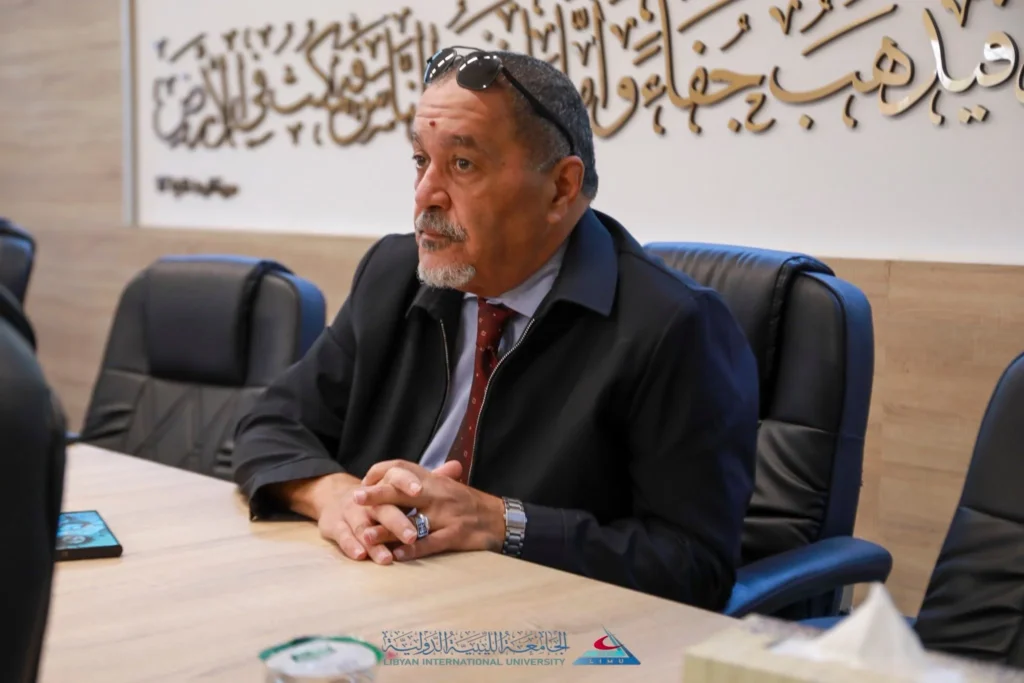
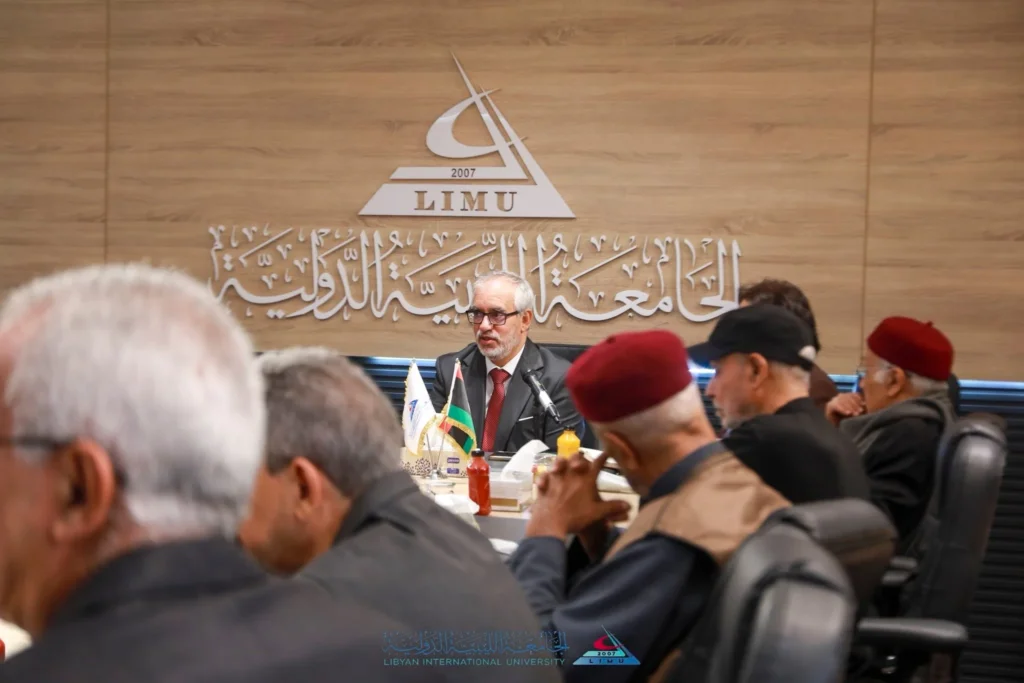
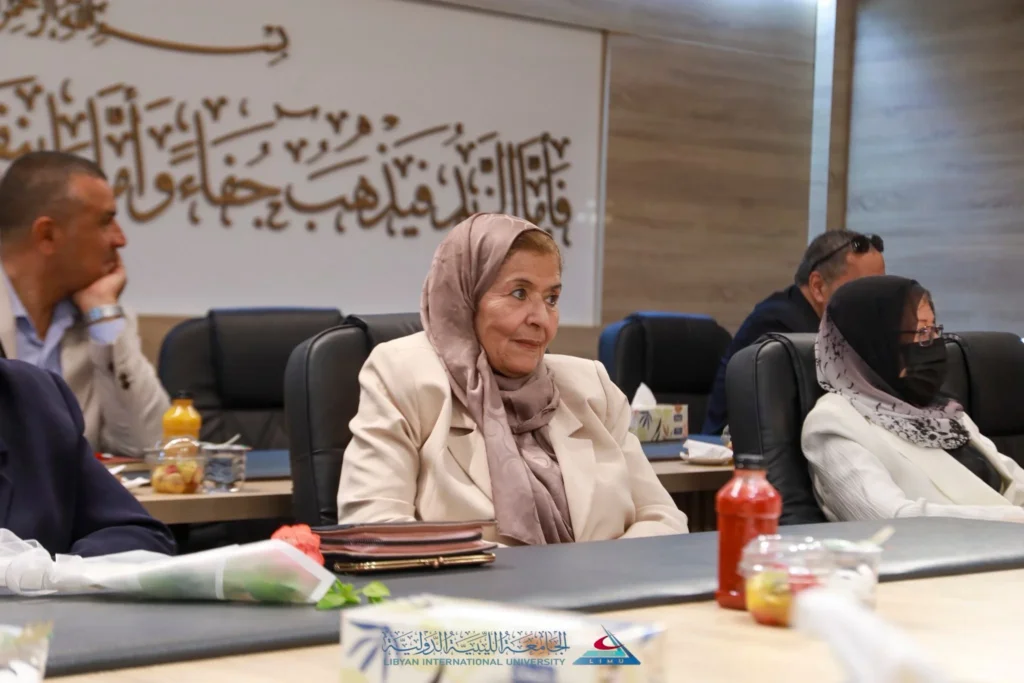
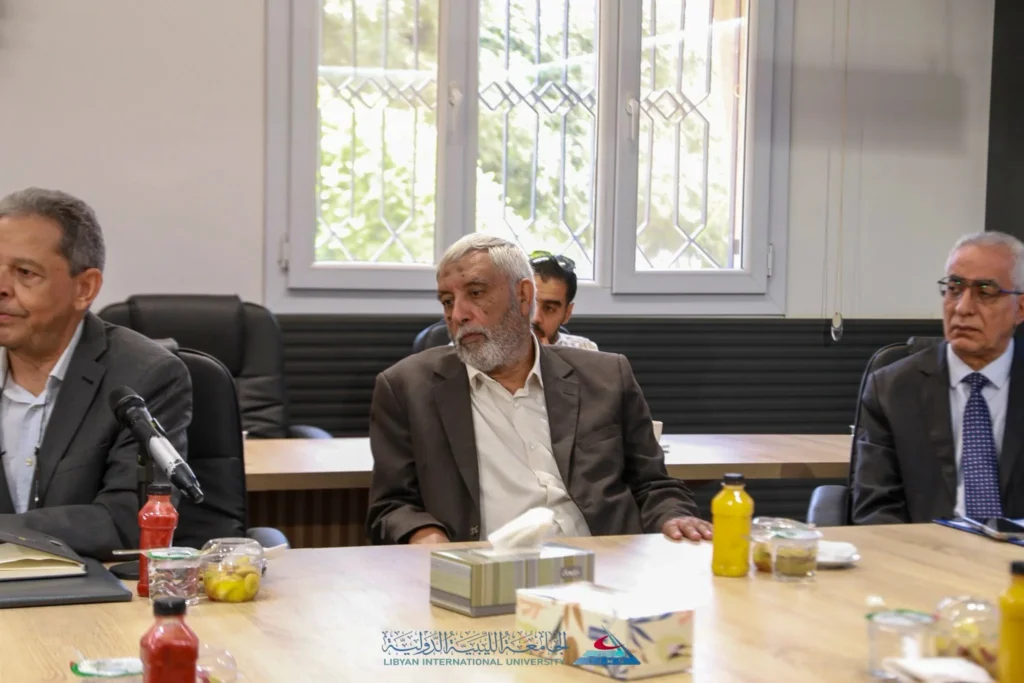
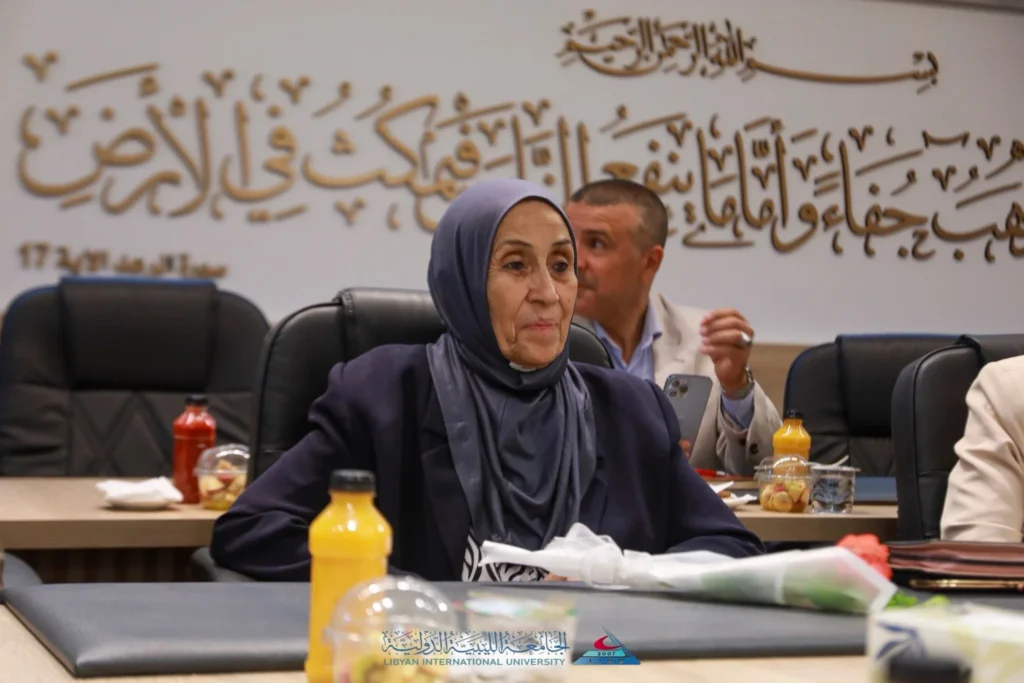
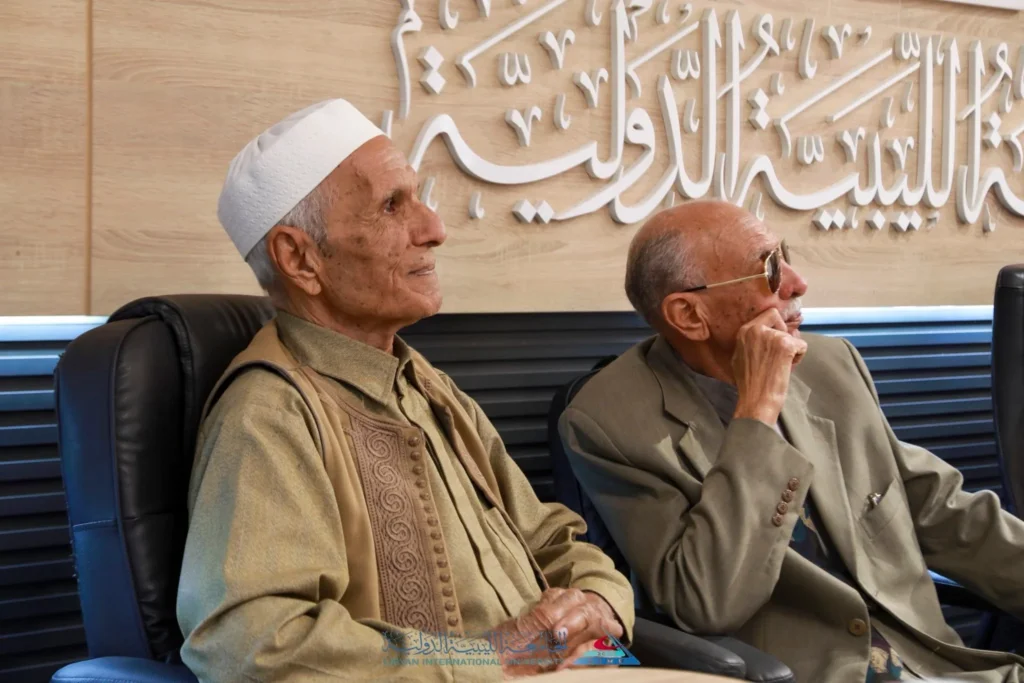
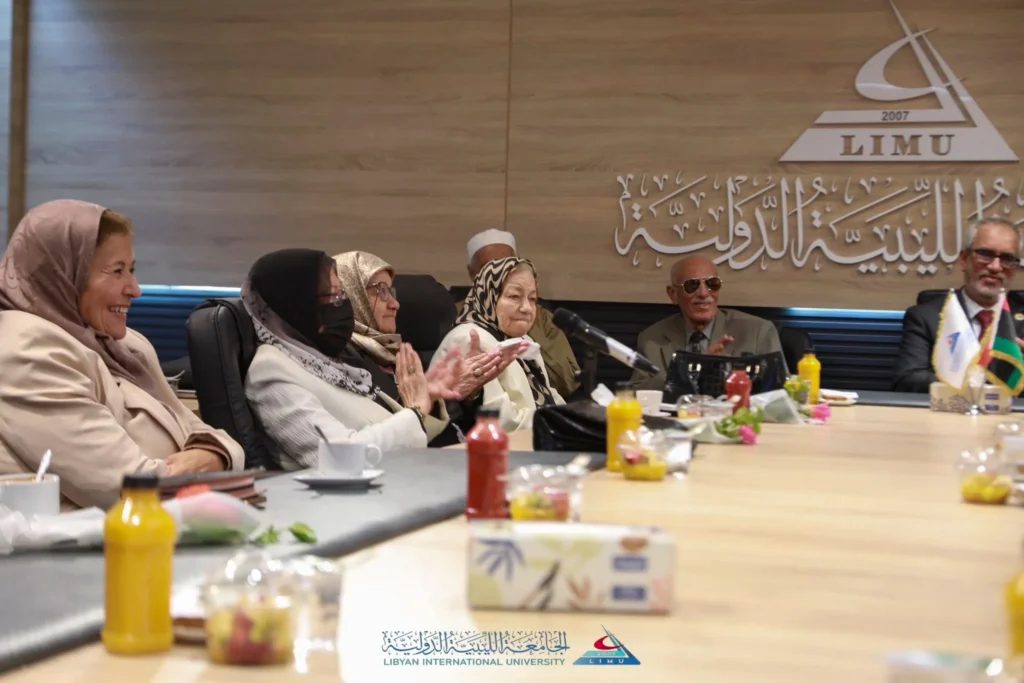
Under the patronage and presence of the University President, Professor Dr. Mohamed Saad Embarek, the National Unity Hall witnessed on the morning of Sunday, May 24, a unique session distinguished by its noble purpose and profound symbolism. The gathering embodied the vision of the Libyan International University since its founding: to enshrine the values of loyalty and gratitude toward those who devoted themselves to this nation and remained steadfast in their belonging—earning the right to remembrance and continuity.
Who could be more deserving than those honored today—education pioneers and bearers of the torch of knowledge in the most difficult of times. Today, we sit in their presence as the early generations once did: listening, learning, and reviving history. Together, we dust off pages that must be revealed and celebrated.
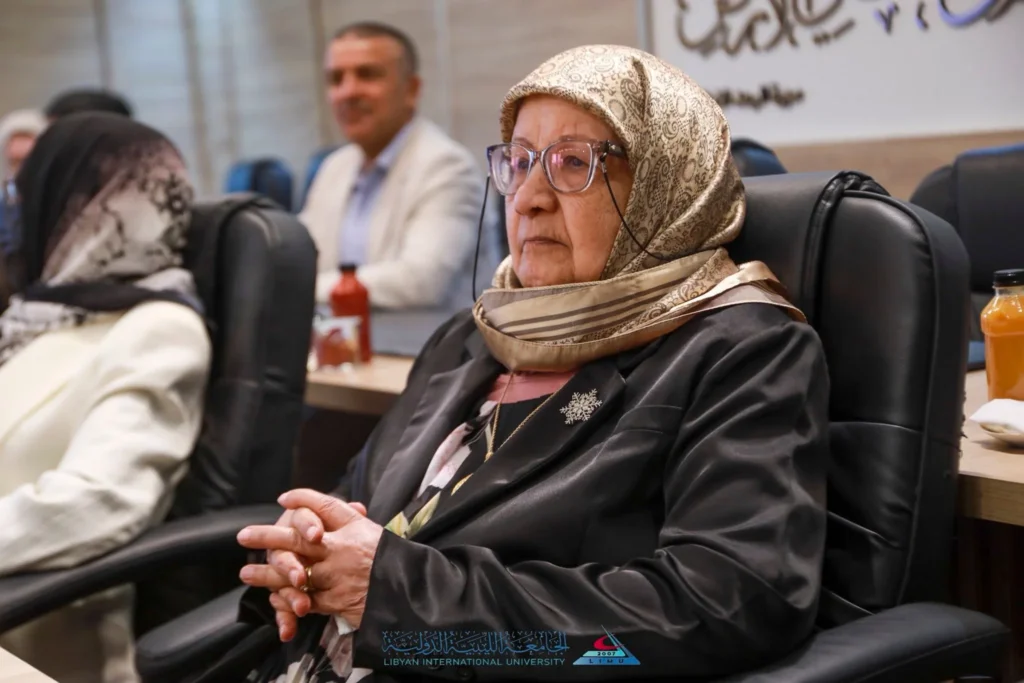
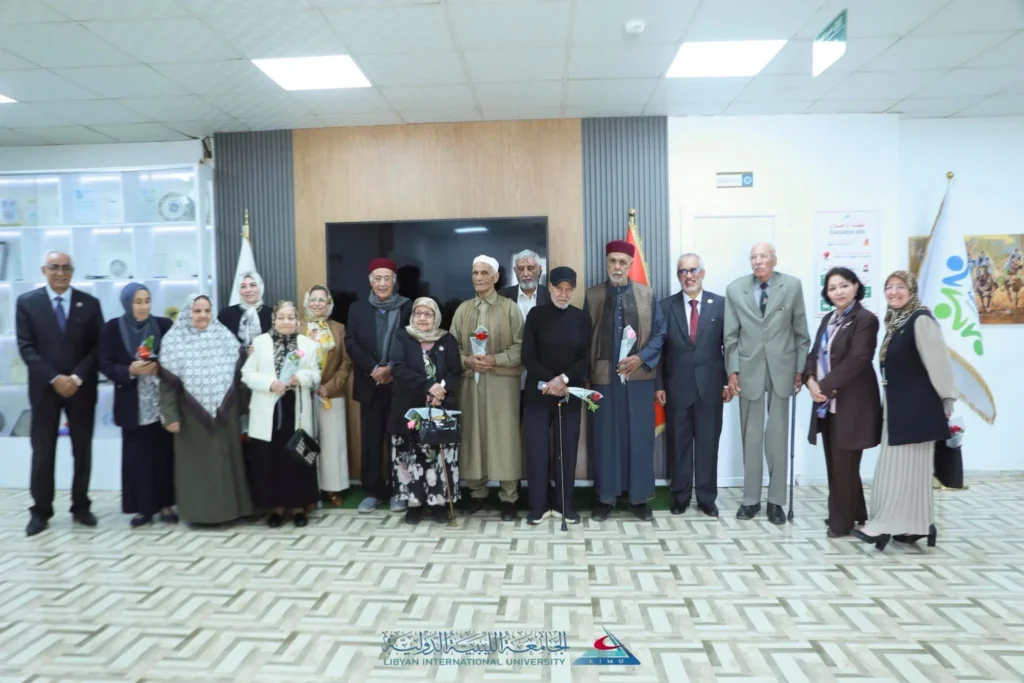
With the participation of the Supreme Organizing Committee of the project “Figures from My Homeland” (Fourth Edition), a brainstorming session was convened with a distinguished group of education pioneers from the 1950s and 1960s, including:
- Ms. Salma Abdelnabi
- Ms. Sharifa Mohamed Al-Zahawi
- Ms. Hawa Hussein Al-Werfali
- Ms. Nuriya Ahmed Al-Sharif
- Ms. Khadija Abdelhadi Iftita
- Mr. Issa Mohamed Ibrahim Al-Zughaid
- Mr. Saleh Al-Barki
- Mr. Ali Mohamed Al-Shoumani
- Mr. Saleh Al-Durbak
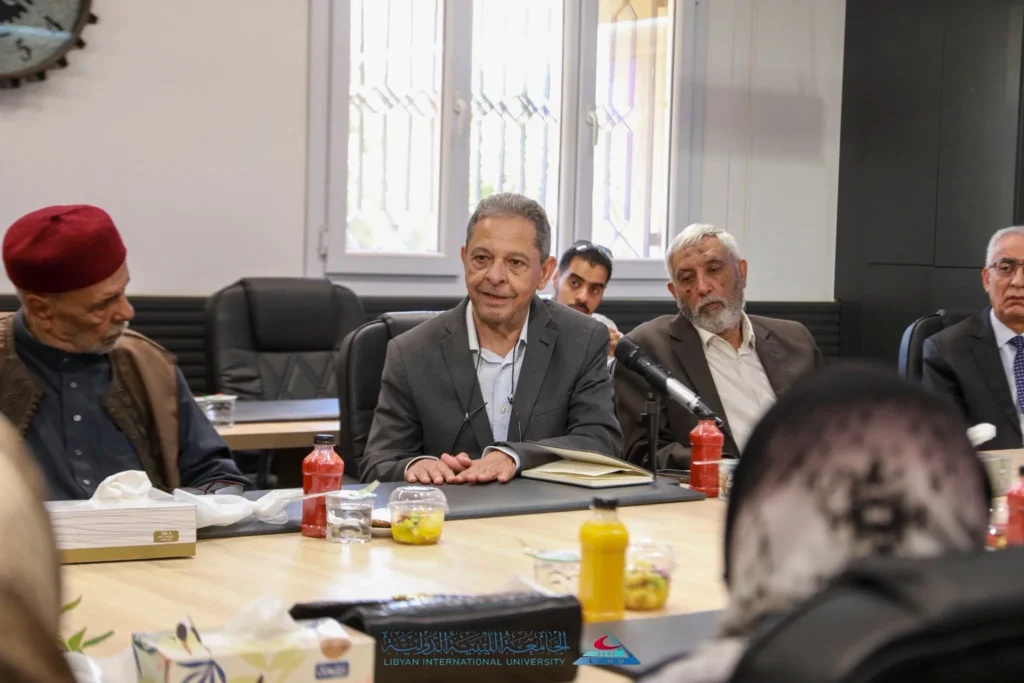
The University President warmly welcomed the esteemed guests, praising their presence, history, and contributions. He affirmed that honoring pioneering educators is both a national and moral duty, central to the vision of the Libyan International University since its inception: to highlight the historic role of those who built the nation under the harshest conditions, serving as role models for successive generations.
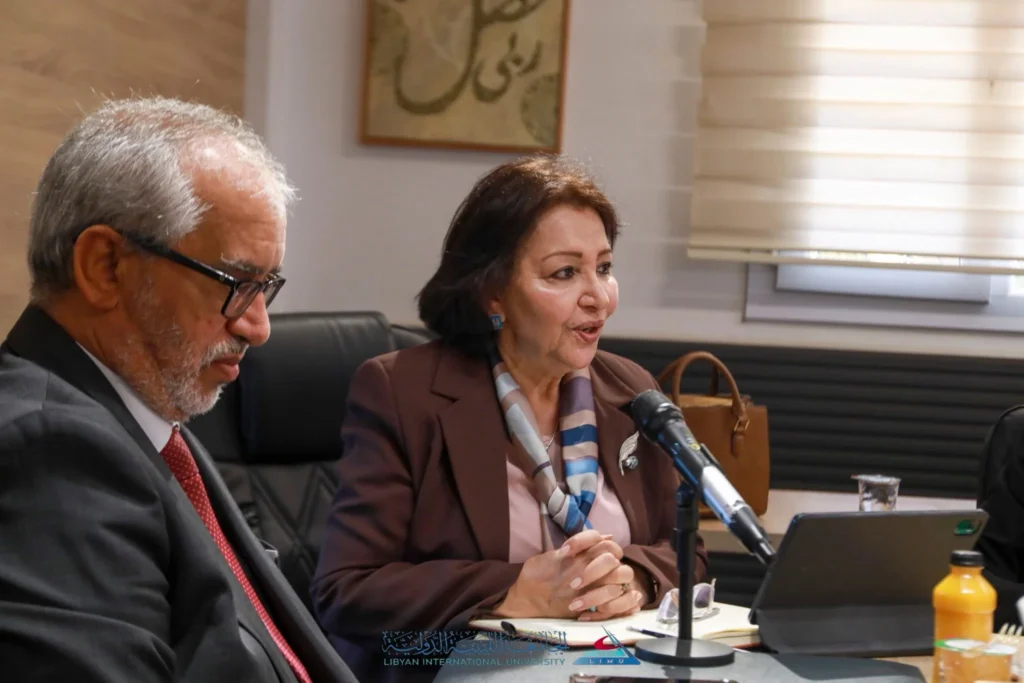
The session also featured a welcoming address from the Organizing Committee, delivered by its Chair, Ms. Najiba Astita, who thanked the pioneers for accepting the invitation. She emphasized that their presence forms the cornerstone of preserving Libya’s educational memory and enriching this national project.
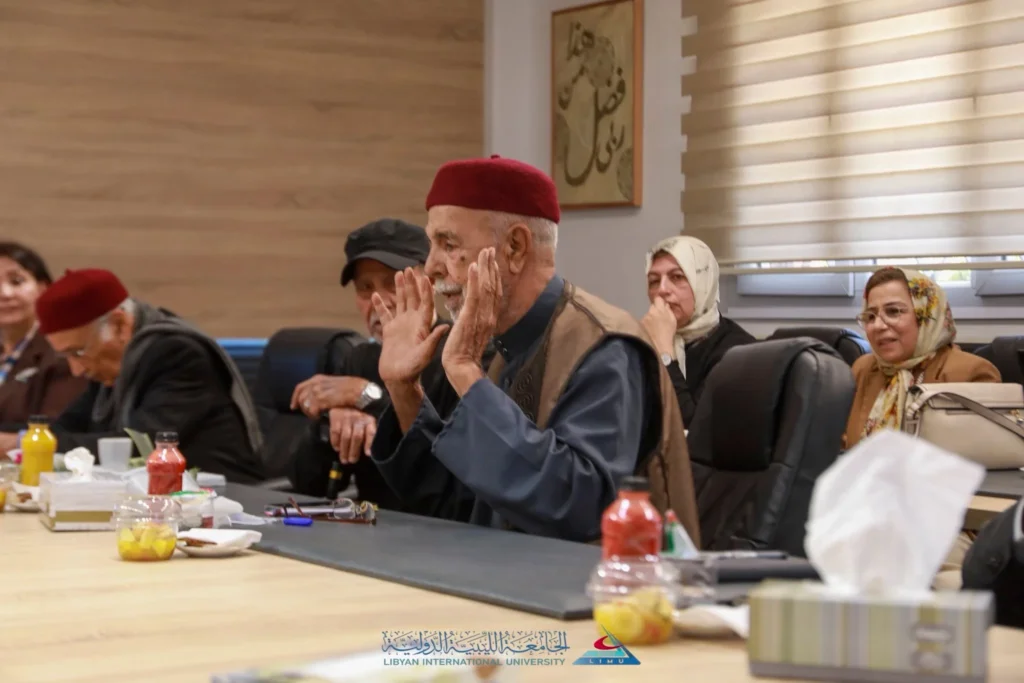
Attendees shared their human and educational experiences during this sensitive era of Libya’s history. The discussions revealed the pioneers’ “golden memory,” astonishing the audience as they vividly recalled schools, curricula, and the nature of teacher-student relationships of that time.
The session was distinguished by a rich and captivating intervention from Mr. Saleh Al-Durbak, who recounted a vast collection of precise historical details and undocumented events. Other pioneers contributed generously with exclusive memories and insights, creating a harmonious atmosphere and a sense of pride among the University team, who felt honored to listen to and document these invaluable treasures.
The pioneers expressed their profound joy at this “warm historic gathering, filled with values and noble ideals.” They shared how the event touched their spirits, reassured their hearts, and whispered to their ears that every drop of sweat they shed was not in vain, and every step they took is etched in the nation’s record. They conveyed deep gratitude to the University for this gesture, which revived their cherished days and assured them that their contributions have not been forgotten. They also confirmed their enthusiasm to participate in shaping this historical legacy.
The attendees concluded with the following recommendations:
- Immediate transcription and recording of all oral testimonies and information presented during the session, to preserve them within the project’s archive.
- Maintaining open communication channels with pioneers inside and outside Benghazi to complete historical gaps.
- Creating knowledge content: transforming these testimonies into documentary material (visual and written) to be shared with current generations through the University’s platforms.